The evolution · Part two
Built for the road
Bruce always meant to put racing technology in the hands of
drivers. His M6GT never reached production, but the idea survived
him. Since the McLaren F1 of 1992, every McLaren road car has been
built around a carbon-fibre chassis, technology McLaren brought to
Formula 1 in 1981.
1969
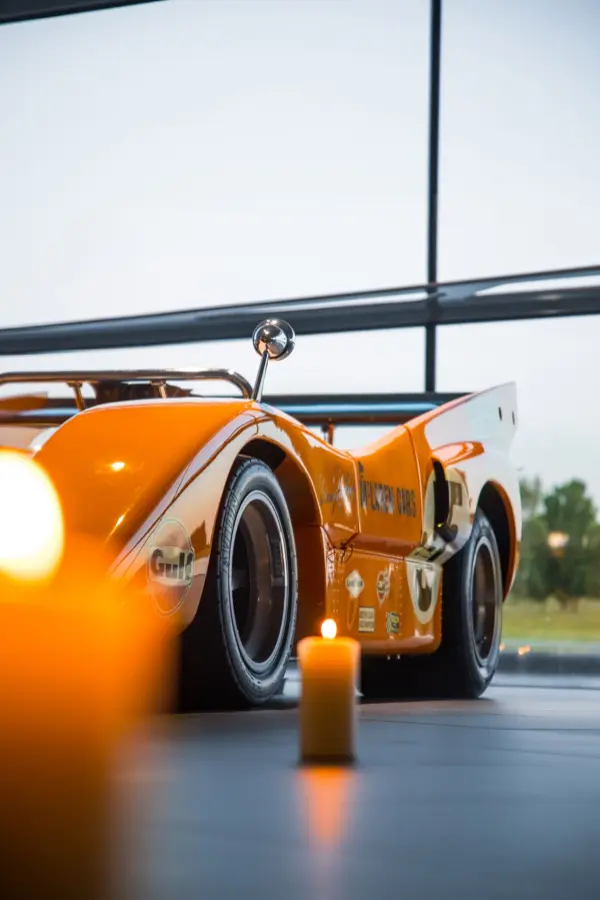
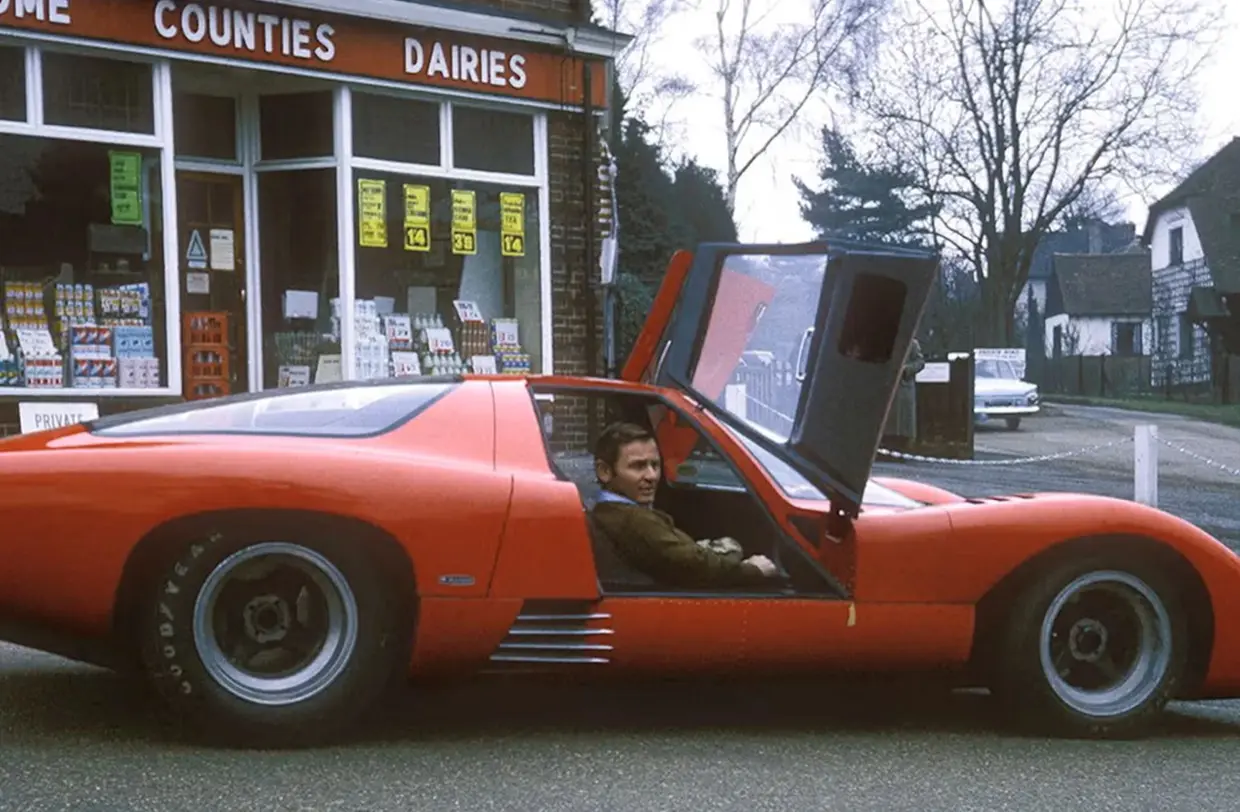
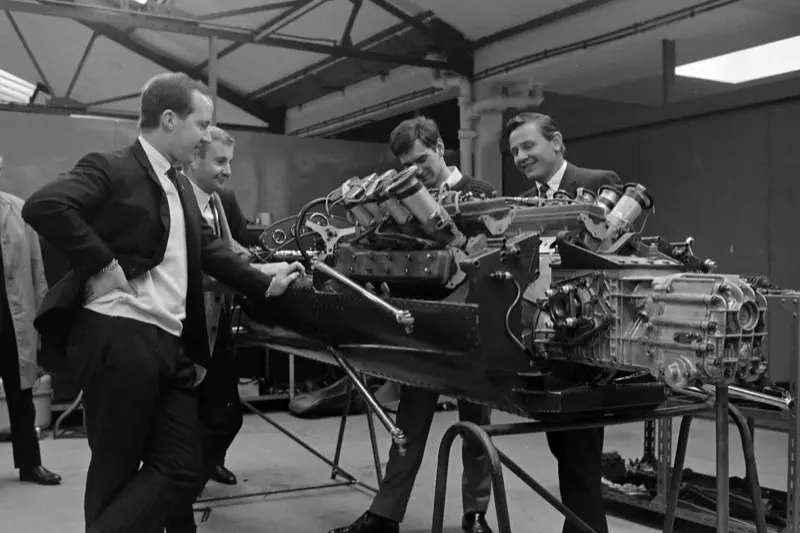
Bruce builds the M6GT, a Can-Am car for the road
240.1 mph
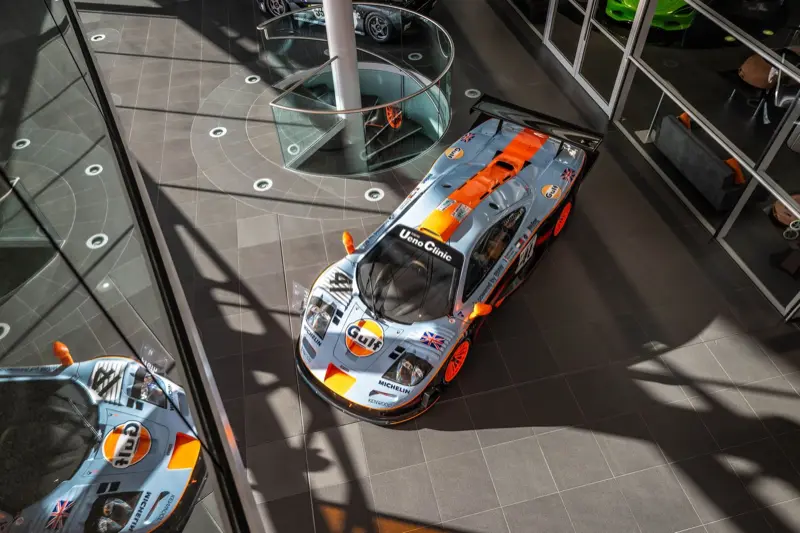
McLaren F1, fastest production car in the world, 1998
2010
McLaren Automotive is launched in Woking, England
1969
M6GT
Prototype · V8
Bruce’s dream of a Can-Am racer for the road. He drove one himself
before his death in 1970.
1992
McLaren F1
6.1L V12 · 106 built
Central driving seat, gold-lined engine bay and a 240.1 mph
record. Gordon Murray’s masterpiece.
2003
SLR McLaren
5.5L supercharged V8
Built in Woking in partnership with Mercedes-Benz, with a full
carbon-fibre body and chassis.
2011
MP4-12C
3.8L twin-turbo V8
The first car from McLaren Automotive, built around the
carbon-fibre MonoCell.
2013
P1
Hybrid V8 · 375 built
McLaren’s first hybrid hypercar, bringing Formula 1 energy
recovery thinking to the road.
2015
570S
Sports Series
Brought the McLaren carbon chassis to a new generation of everyday
sports-car drivers.
2017
720S
4.0L twin-turbo V8 · 720 PS
The Super Series benchmark, with its sculpted “double skin”
aerodynamic doors.
2018
Senna
800 PS · 500 built
Named for Ayrton Senna. The most track-focused road McLaren ever
built at launch.
2020
Speedtail
Hybrid V8 · 106 built
A three-seat Hyper-GT that revived the F1’s central driving
position.
2022
Artura
Hybrid V6
McLaren’s first series-production High-Performance Hybrid, on an
all-new carbon architecture.
2023
750S
4.0L twin-turbo V8 · 750 PS
Successor to the 720S. Lighter, quicker and sharper in every
direction.
2025
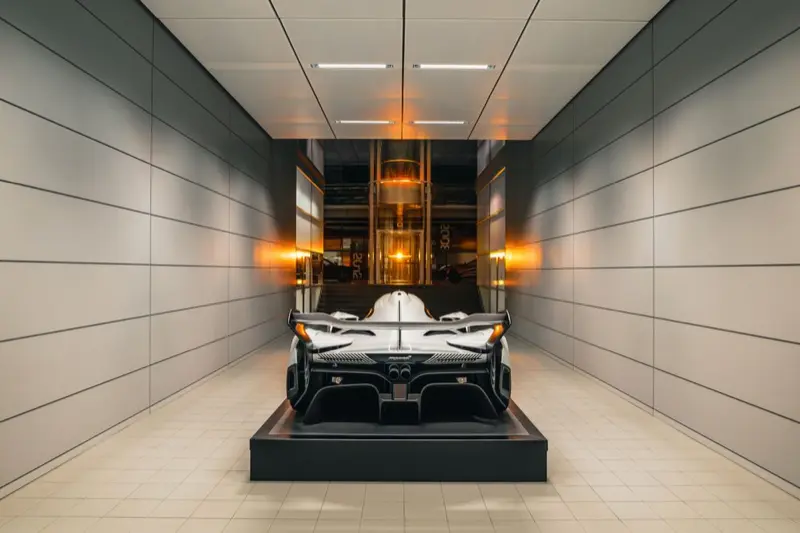
W1
Hybrid V8 · 399 built
The heir to the F1 and P1, and the new flagship of the McLaren
line.